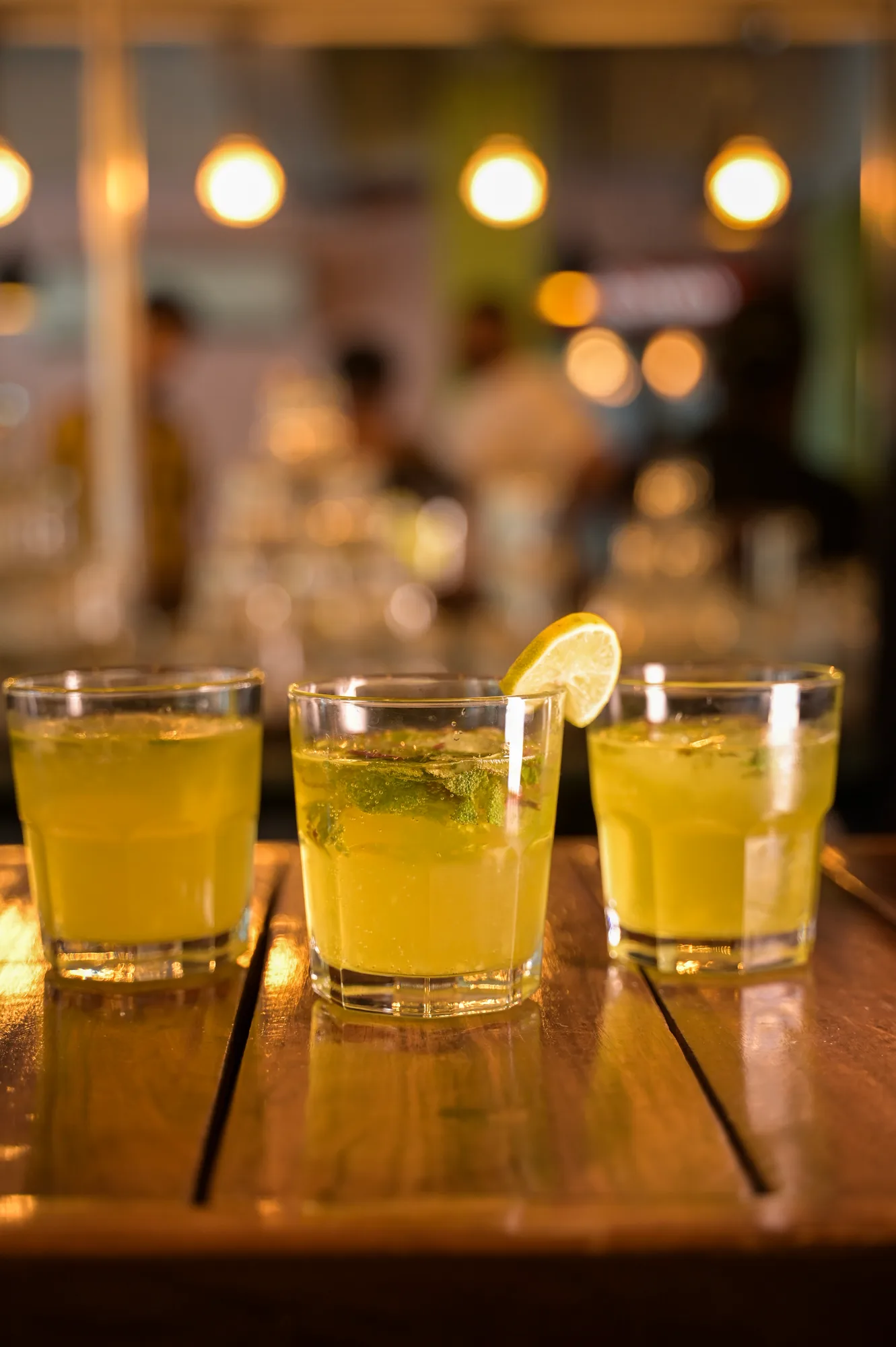
A hotel sells two things at once — a physical property and an emotional promise. A guest booking a suite in Goa isn’t just choosing four walls; they’re buying into the idea of a morning on a balcony with the Arabian Sea behind them, a quiet hour at the pool, a dinner that tastes like the place it came from. Hotel photography is the craft of turning that promise into images that actually hold up when a traveller is scrolling through ten other properties on a Saturday night.
We shoot for luxury hospitality brands across India — from standalone boutique resorts in Goa to legacy chains like Taj. Over the years we’ve watched how the brief has shifted. It’s no longer enough to deliver a portfolio of pretty rooms. Hotels need a visual library that performs on booking engines, social feeds, OTAs, brochures, campaign creative, and every surface in between. This piece is a working photographer’s guide to how we plan and execute commercial hotel photography in India — and what luxury brands should expect when they commission a shoot.
Why hotel photography is different from any other shoot
Most commercial genres have a fixed subject. Product photography is about the object. Food photography is about the dish. Even architecture photography sits still. A hotel is all of those things happening in parallel — architecture, interiors, F&B, lifestyle, landscape, detail — and the photographer has to move between them without breaking the visual voice.
A proper hotel photoshoot is structured around how the property will actually be sold. The hero image on the homepage. The tiles on Booking.com and MakeMyTrip. The carousel on Instagram. The double spread in a trade magazine. The keyframe for a campaign on Meta or Google. Each of those placements has a different aspect ratio, a different hierarchy of information, and a different emotional register. We plan shot lists around placements, not rooms.
What a full hotel photography scope actually covers
When a property briefs us for a complete visual refresh, the coverage usually breaks into six pillars. Each pillar is its own mini-shoot and benefits from its own lighting kit, timing, and approach.
1. Rooms, suites, and villas
This is the commercial backbone. Every category of room needs a hero shot that reads at a glance, a detail shot that shows quality, and an alternative angle for secondary pages. For luxury hotels we usually shoot at golden hour with practical lights on and mixed ambient to keep warmth in the frame. Flash is useful, but too much of it kills the sense of place. We’d rather shoot a long exposure with sheer curtains moving than an over-lit room that looks like a catalogue.
2. Food & beverage
Restaurants and bars inside a hotel have to look like destinations in their own right. This is where our food photography approach travels into hospitality. Signature dishes, bar programs, private dining, in-room breakfast — each set needs its own styling conversation with the chef. For Indian hotel brands we usually shoot the menu in two passes: editorial (moody, cinematic, hero-dish led) and commercial (clean, front-lit, good for ordering-platform integrations).
3. Architecture and exteriors
Façades at blue hour, drone sweeps of the property in context, pool decks with perfect reflections, gardens with scale. This is the work that sells the arrival. Because Indian light is harsh through the middle of the day, we schedule exteriors for a 40-minute window at sunrise and again at blue hour. Drone coverage needs permissions cleared in advance — DGCA rules and local airspace restrictions are real and have killed more than one shoot day.
4. Amenities and experiences
Spa treatment rooms, gyms, kids’ clubs, business centres, banquet halls, meeting spaces. These are functional images but they’re also part of how a hotel pitches to MICE clients, wedding planners, and corporate buyers. The brief here is usually about clarity and completeness — rooms have to look usable, not just beautiful.
5. Lifestyle with guests and staff
Empty rooms sell the product. Guests in the frame sell the experience. We like to shoot a small lifestyle narrative into every hotel brief — a couple at breakfast, a family by the pool, a guest walking the corridor with a staff member carrying luggage. These frames perform disproportionately well on Instagram and in campaign creative. They need models with signed releases, wardrobe planning, and a continuity supervisor if the shoot stretches across days.
6. Detail and texture
The stack of books on a nightstand. A bar of soap with the hotel’s monogram. The stitch on a cushion. Marble veins catching the morning light. Detail frames are what separate a luxury hotel photography library from a generic one. They are the images that get used in print, in packaging, in merchandising, and increasingly in the short-form video cuts that social teams are building now.
Case study: photographing Taj for Christmas 2023
One of our favourite recent hospitality briefs was with Taj for their 2023 festive campaign in Goa. The brief was deceptively hard: shoot Christmas decor across multiple Taj properties, in one compressed window, with enough variation to feed every placement — from 4×5 press, to 1:1 Instagram, to 9:16 Reels, to 16:9 property website hero.
We approached it the way we approach every taj hotel photography engagement: recce first, shoot second. A walk-through the evening before lets us map the light, identify hero angles, and flag any decor that will need a second styling pass before camera. The next morning we shot clean product-style frames of the centerpieces, then waited for the afternoon to soften before doing wider editorial frames with staff and subtle human presence. Blue hour was reserved for the lit-tree hero that ran across the campaign. You can see a slice of the final work in our Taj Christmas portfolio.
Two lessons from that shoot that apply to any luxury hotel brief in India:
- Decor is not the subject — the hospitality is. We kept resisting the temptation to shoot tight on ornaments. The stronger frames always placed the decor inside the architecture of the property, with the hotel reading as the hero.
- Multiple aspect ratios must be composed, not cropped. We shot every scene as three separate compositions — horizontal, vertical, square — rather than shooting one wide frame and cropping it later. It’s slower, but it’s the only way to get hero-quality images across every placement.
Lighting rooms and interiors without killing the mood
The hardest part of hotel interior photography is balancing three light sources that never want to cooperate: warm practicals (bedside lamps, pendants), cool daylight from windows, and whatever ambient fill you add. Our default approach:
- Shoot tethered so the art director can see compositions immediately and intervene on styling.
- Meter for the window, then bring interior up with flags and a single diffused light placed camera-left at three-quarter height.
- Bracket exposures for HDR-style blends on scenes with very high dynamic range — but only as fallback, never as primary workflow. Over-blended hotel images are an instant giveaway.
- Kill overhead fluorescents or cold LED downlights wherever possible. Most luxury rooms have dimmable practicals for a reason.
- Dress the bed twice. Once for the wide frame, once for the tighter lifestyle frame with linen slightly rumpled and a book or a morning tray on it.
Hotel food photography: editorial and commercial passes
Every signature dining room in a hotel has a marketing problem: a single set of food images has to work for menus, websites, delivery platforms, Instagram, and festive campaigns. We solve this by planning two shoots back to back. An editorial pass is low-lit, moody, close-in, and shot for brand storytelling. A commercial pass is clean, front-lit, consistent across every dish, and shot for ordering integrations like Swiggy or Zomato where contrast and legibility matter more than atmosphere.
The two passes share the same food stylist, the same plate ware, and ideally the same prep batch. Doing both in one day saves cost and creates a unified library. More on the F&B side of this craft in our guide to restaurant food photography.
Exteriors, drones, and the Indian light problem
India has beautiful light for roughly ninety minutes a day — thirty at sunrise, sixty from golden hour to blue hour. Everything else is either too harsh, too hazy, or too flat. For hotel exteriors we plan the entire week of shooting around these windows. Drone work typically runs at sunrise, when winds are calm and light is raking. Pool shots usually go at late afternoon when the water picks up warm reflections without blowing out.
A note on drone permissions: DGCA classifies most hotel properties as enterprise zones requiring NPNT (No Permission, No Takeoff) clearance. For coastal hotels in Goa, there are additional defence airspace restrictions near the Dabolim sector. We factor permits into the pre-production timeline — usually ten working days — and never promise drone footage without confirmed clearance.
Lifestyle frames: guests, staff, and the human layer
Luxury hotels are increasingly investing in lifestyle imagery because empty rooms don’t sell experience. A concierge greeting a guest, a couple raising glasses at sunset, a child jumping into a pool — these frames are the ones that convert browsers into bookings. From a production standpoint, lifestyle frames require the most planning:
- Cast guests who look like the property’s actual target audience, not generic stock models.
- Wardrobe-style every frame. Mismatched clothing is the fastest way to make a luxury hotel look mid-tier.
- Brief staff members who appear in frame as though they’re being directed on a film set. Natural candid behaviour on a hotel shoot is rarely actually natural.
- Get signed model releases for every identifiable person in frame — guests and staff. This is non-negotiable for any usage beyond internal.
What to brief a commercial hotel photographer in India
Brands that brief us well get stronger work. A complete hotel photography brief usually includes:
- Placements and usage. Where will these images live? Website, OTAs, print, OOH, social, internal comms, PR? Usage affects model releases, resolution, aspect ratios, and licensing.
- A shot-list priority order. We always ask for the top ten must-have frames. If the shoot runs short — weather, guests, operational disruption — we know what to protect.
- Brand guidelines. Colour palette, tonality (warm vs cool), preferred lens character (wide vs compressed), and existing visual benchmarks from the brand’s archive.
- Stylist and production support. Either the property provides housekeeping and F&B support for styling, or we bring a stylist. It cannot be neither.
- Calendar. Seasonal decor, occupancy windows, quiet periods for shooting public spaces. Most Indian luxury hotels have about three practical shoot windows a year.
Post-production for hospitality
Retouching for hotel photography sits in a narrow aesthetic band. Too clean and it reads as a stock render; too stylised and it stops matching the actual guest experience. Our post workflow for luxury hotel briefs:
- Colour-balance to the brand’s master palette, not to taste.
- Retouch for reality — remove wrinkles on linen, align lampshades, clean up wires, but keep the genuine character of materials.
- Consistent sky replacement only where weather forced a compromise, and only with a disclosed approach.
- Export in three masters: print (16-bit TIFF, Adobe RGB, 300 DPI), web (sRGB, optimised JPEG), and social (1:1 and 9:16 crops with safe areas for text overlays).
How much does hotel photography cost in India?
A full commercial hotel photography engagement for a luxury property in India typically runs across two to four shooting days, one scouting day, and roughly three weeks of post-production. Budgets depend on coverage scope, lifestyle cast requirements, drone permissions, and usage rights — but a complete brand-grade library for a mid-size luxury hotel usually lands in the mid-six-figure range in INR. We scope every brief individually and give itemised quotes. You can get in touch here for a scoped estimate.
Frequently asked questions
What does hotel photography include?
A full hotel photography brief usually covers six areas: rooms and suites, food and beverage, exteriors and architecture, amenities like spa and pool, lifestyle frames with guests, and detail shots. Each area has its own lighting and scheduling requirements. Smaller briefs can scope down to specific sections — for example, just a seasonal F&B campaign or a rooms-only refresh for an OTA update.
How long does a hotel photoshoot take?
A complete luxury hotel library typically takes two to four shooting days on property, plus a half-day recce and two to three weeks of post-production. Properties with more room categories, multiple F&B outlets, and extensive amenities trend toward the longer end.
Do I need models for hotel lifestyle images?
For any image where the guest is clearly identifiable and the image will run in paid media, yes. We usually cast through local agencies in Goa and Mumbai and handle releases in-house. If the shoot is ambient — guests in silhouette or back-of-head — releases are simpler but still recommended.
Can you handle drone photography at hotels in Goa?
Yes, with the right lead time. DGCA clearances and local airspace permissions take about ten working days in Goa. We factor that into the pre-production calendar and never promise drone footage without confirmed permits. Coastal hotels near Dabolim have additional defence restrictions we handle as part of the scoping process.
What rights and licensing come with the images?
Standard engagement terms cover unlimited digital usage on the brand’s owned channels, OTAs, and PR. Paid media, print, OOH, and third-party licensing are scoped and priced separately. We issue a usage rider with every delivery so there’s no ambiguity later.
Ready to commission a hotel photography shoot?
Panoramyk Studios is based in Goa and shoots for hospitality brands across India — independent luxury resorts, boutique hotels, and legacy chains like Taj. If you’re planning a visual refresh for your property, a seasonal campaign, or a full brand-grade photo library, we’d love to scope it with you. Get in touch or see recent work in our portfolio.